
Healthcare lifts need to be judged by operational suitability, not only by passenger-lift defaults.
Hospital lifts
Hospital lifts and public-use elevator planning for healthcare buildings.
Hospital lifts need to work for patients, staff and visitors. If beds, stretchers or wheelchairs will use the lift, check that they fit through the door, inside the cabin and around each landing. Allow for accompanying staff and equipment, and plan maintenance support early.
It is useful to talk before cabin size, waiting expectations, and maintenance assumptions get locked too early.
Useful for healthcare and public-use environments where reliability matters
Best when cabin fit, public-use flow, and service clarity are reviewed together
A short hospital or clinic brief is enough to begin the discussion
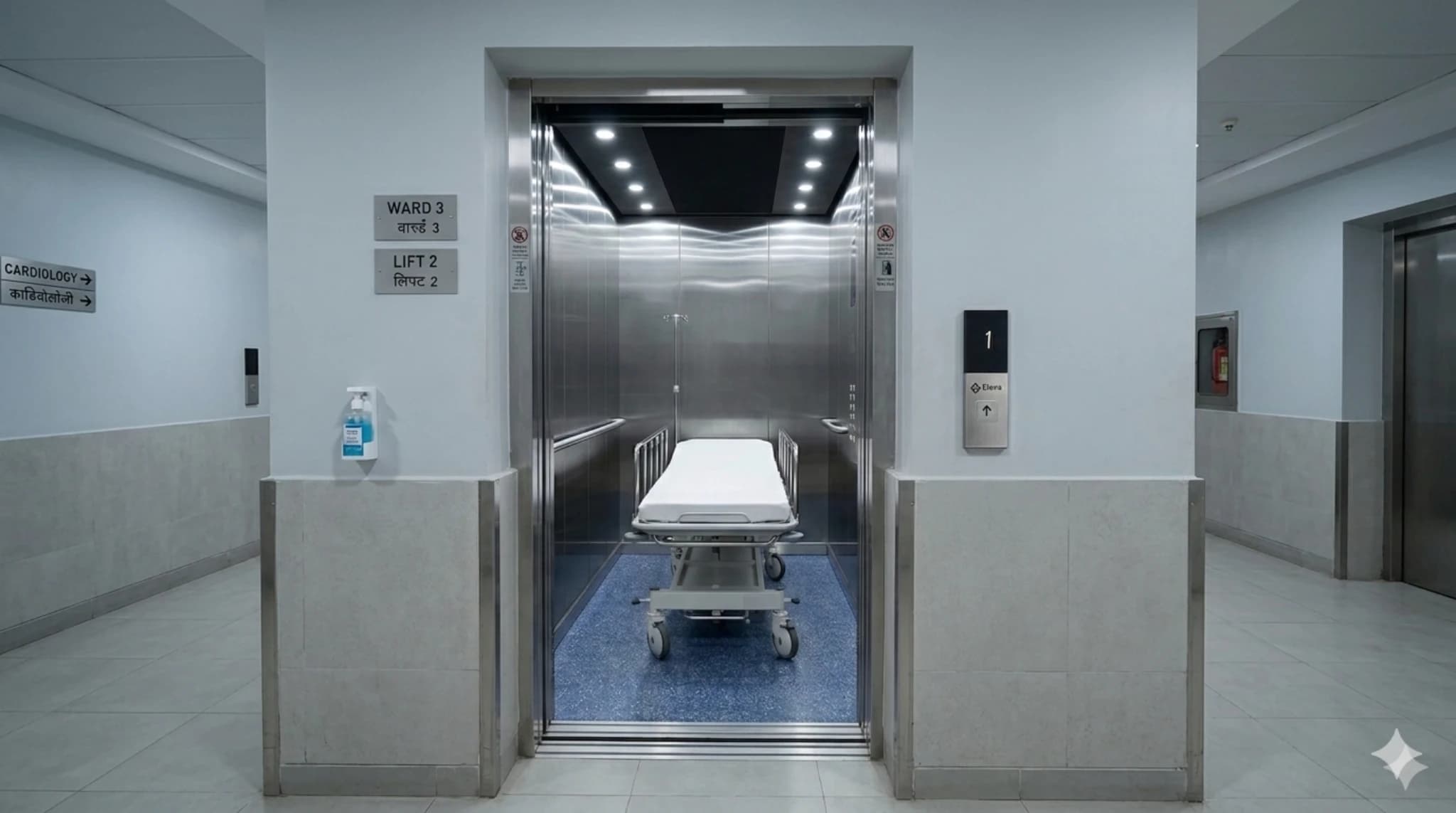
What to review early
Stretcher and wheelchair movement requirements
Public-use traffic and uptime expectations
Service clarity before handover and operation
Key points
Cabin sizing, door approach, and reliability expectations should be resolved early for hospital environments.
Maintenance discipline matters because public-use downtime has immediate operational consequences.
Our Clients

Vicco

MR.DIY

DoubleTree by Hilton

Vedanta

Concrete Builders

Unichem

Hero

Adwalpalkar

Aldeia de Goa

B&F

Bharatgas

Bina Punjani

CDM

ESG

Jubilant Foodworks

South Realty
Vicco
MR.DIY
DoubleTree by Hilton
Vedanta
Concrete Builders
Unichem
Hero
Adwalpalkar
Aldeia de Goa
B&F
Bharatgas
Bina Punjani
CDM
ESG
Jubilant Foodworks
South Realty
Where this is usually suitable
Hospitals
Clinics and healthcare centres
Institutional healthcare buildings
Public-use projects with stretcher or patient movement needs
What hospital-lift planning usually needs to solve
Patient and public movement that needs a more disciplined fit
Healthcare buildings often need closer review of cabin usability, door width, and user flow than standard building lifts do.
Reliability expectations that are higher than a typical building
Hospital and clinic lifts usually need clearer service responsibility, uptime thinking, and escalation discipline from the start.
Public-use pressure on a package that was treated too generically
A healthcare building can quickly expose the limits of a passenger-lift decision that was not planned around operational reality.
Relevant project example
This project proof is useful because it reflects passenger-lift planning around daily movement and maintainability, which are both critical in healthcare environments.
Project case study
Passenger lift package with maintainability focus
A Goa passenger-lift case study that helps illustrate traffic, cabin fit, and long-term service practicality together.
Planning notes worth reviewing early
These articles help healthcare teams and institutional projects frame lift suitability and service readiness more clearly.
Planning insight
Passenger elevator planning for low-rise buildings
Useful when a clinic or smaller healthcare building needs clearer passenger-lift planning before selection is fixed.
Planning insight
How to plan elevator maintenance before building handover
Helpful when a hospital or healthcare building is moving toward operation and maintenance readiness still needs tightening.
Planning insight
Common planning mistakes in elevator shaft design
Useful when cabin size, stretcher movement, or landing fit still depends on shaft assumptions that need a more practical review.
Questions buyers usually ask
How is hospital-lift planning different from a typical passenger lift?
Hospital lifts usually need closer attention to patient movement, stretcher fit, public-use demand, and service reliability than standard residential or office passenger-lift planning.
What size lift is needed for a stretcher or hospital bed?
Use the actual bed or stretcher dimensions, including space for staff and equipment. Check the cabin, door width and turning space at every floor. Passenger capacity alone does not tell you whether a bed will fit.
Should service planning already be part of the healthcare lift decision?
Yes. Uptime, escalation clarity, and maintainability are critical in healthcare environments and should be considered before the building begins operating.
What the next step usually looks like
Healthcare-lift discussions are usually strongest when they begin with use case, building flow, and reliability expectations rather than with a generic product list.
Share whether the building is a hospital, clinic, diagnostic centre, or another healthcare environment.
Mention the floors served and whether stretcher movement, public traffic, or uptime is the main planning concern.
Use the enquiry form to begin the discussion. Eleva can then help narrow whether the next review should focus on cabin fit, public-use flow, or service readiness.