A dumbwaiter is a service-movement decision, so route and loading logic matter more than generic lift language.
Dumbwaiter lifts
Dumbwaiters for restaurants, villas, labs, and hotels with compact multi-level service movement.
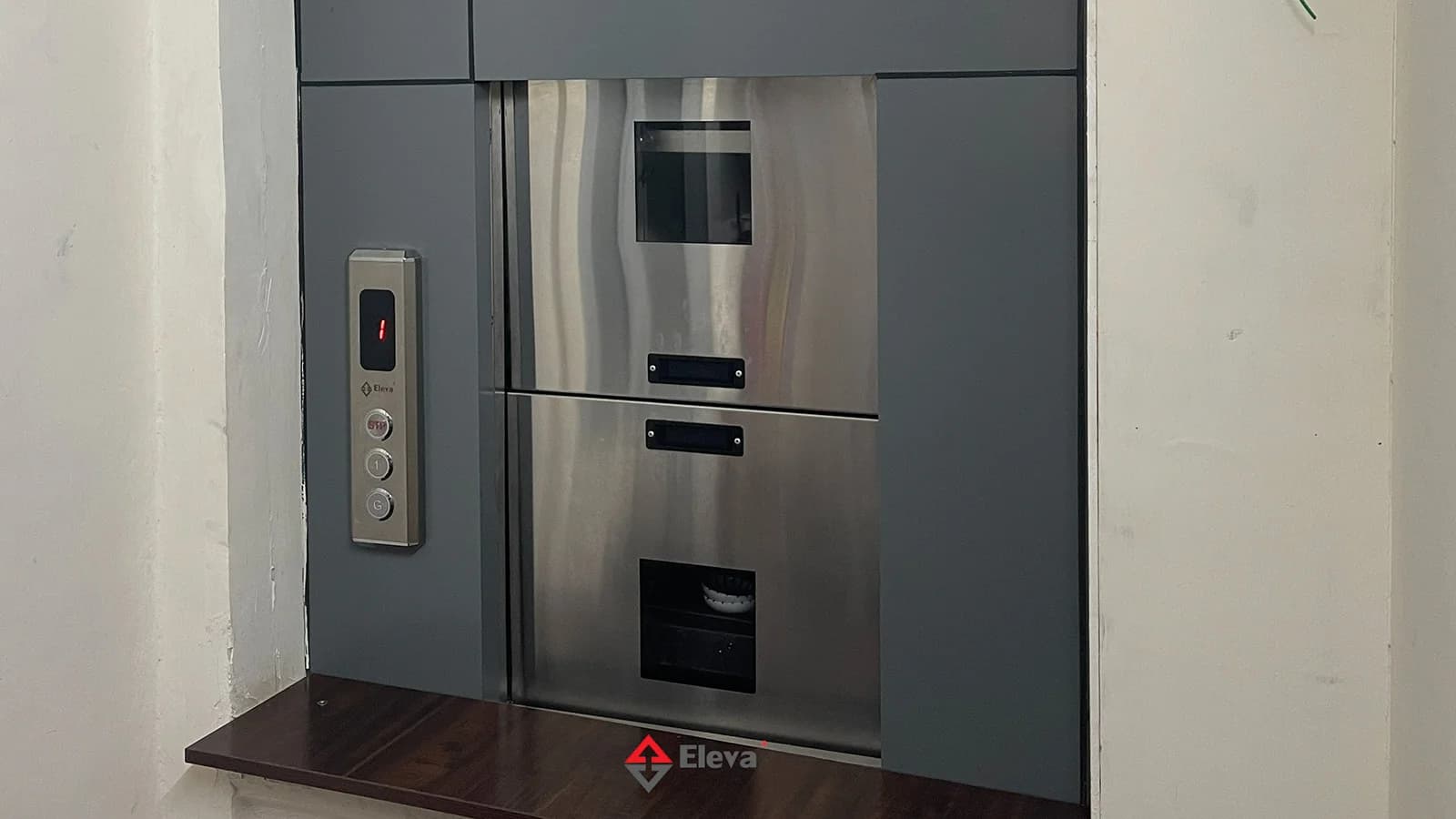
A dumbwaiter is a small service lift for food, dishes, documents and similar items. Choose it around the load per trip, item size, number of floors and a comfortable loading height. Check the available shaft space and maintenance access before fixing the layout.
Goods lift requirements are easier to solve early, before loading pattern and platform assumptions harden into a poor fit.
Useful for kitchens, service counters, and compact multi-level service movement
Best discussed around route, load type, and daily operating pattern
A short service-movement brief is enough to begin the conversation
What to review early
What needs to move and how often
Number of levels and service route
Daily reliability and maintenance access
Key points
Compact installations still need honest planning around shaft, loading opening, and service access.
Repeated small-item movement can benefit from a cleaner dumbwaiter route instead of relying on manual carrying between levels.
Our Clients
Vicco

MR.DIY

DoubleTree by Hilton

Vedanta
Concrete Builders

Unichem

Hero

Adwalpalkar
Aldeia de Goa

B&F

Bharatgas

Bina Punjani

CDM

ESG

Jubilant Foodworks

South Realty
Vicco
MR.DIY
DoubleTree by Hilton
Vedanta
Concrete Builders
Unichem
Hero
Adwalpalkar
Aldeia de Goa
B&F
Bharatgas
Bina Punjani
CDM
ESG
Jubilant Foodworks
South Realty
Where this is usually suitable
Restaurants and hospitality kitchens
Clubs and service counters
Homes with dedicated service movement needs
Buildings that need small-item movement between levels
What dumbwaiter planning usually needs to solve
Small-item movement that is repetitive enough to justify a lift
The question is usually whether the route, frequency, and handling pattern justify a dedicated dumbwaiter instead of continuing with manual movement.
Compact shafts and openings that still need a practical fit
Even a small service lift needs careful review of the opening, landing access, and service route so daily operation stays smooth.
Service reliability on a system that can seem deceptively simple
A dumbwaiter may be compact, but reliability still matters when kitchens or service counters depend on it every day.
Relevant planning note
This note is broader than a dumbwaiter, but it still helps frame service movement, loading logic, and day-to-day operator use before the route is fixed.
Planning note
Goods elevators for material movement in commercial buildings
A practical note that helps illustrate why loading pattern and operator use should lead the conversation early.
Planning notes worth reviewing early
These articles help service-movement projects narrow whether a dumbwaiter or a broader goods-lift discussion is the better fit.
Planning insight
Goods elevators for material movement in commercial buildings
Useful when the first question is whether the movement pattern still points to a dumbwaiter or needs a larger goods-lift route.
Planning insight
Common planning mistakes in elevator shaft design
Helpful when the compact shaft or opening still needs a practical review before finalizing a dumbwaiter route.
Planning insight
What a practical elevator AMC should include
Useful when daily reliability and maintenance discipline also need to stay part of the conversation.
Questions buyers usually ask
When is a dumbwaiter more suitable than a larger goods lift?
A dumbwaiter suits smaller items that staff load and unload by hand, such as food, dishes or documents. For trolleys, pallets or heavier loads, consider a goods elevator. Check the item size, weight and number of trips before choosing.
Does a dumbwaiter still need maintenance planning?
Yes. Even compact service lifts benefit from a clear maintenance path and practical service access so daily operation stays reliable.
What the next step usually looks like
Dumbwaiter conversations usually start with a simple service-movement brief rather than a full specification package.
Share what needs to move, how often it moves, and how many levels the dumbwaiter would serve.
Mention whether the route is for a kitchen, service counter, home utility use, or another compact movement need.
Use the enquiry form to begin the discussion. Eleva can then help narrow whether the next review should stay with a dumbwaiter or move toward a broader goods-lift discussion.