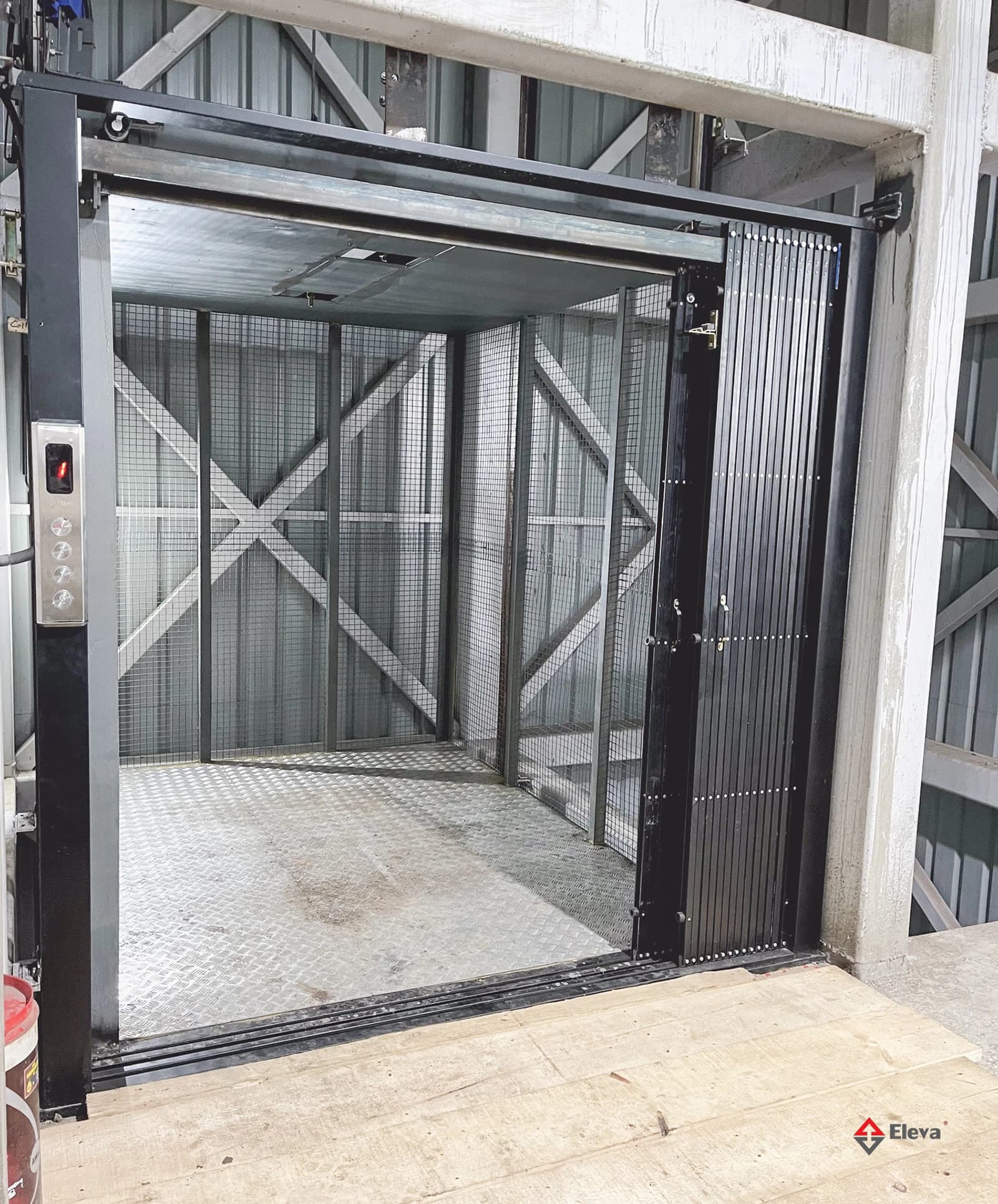
Industrial lifts should be selected around the actual material flow, not around a passenger-lift baseline.
Industrial lifts
Industrial lifts for factories, warehouses, and service movement.
Industrial lift planning depends on load type, handling pattern, duty cycle, and reliability under real site conditions. Eleva approaches these lifts around actual movement logic rather than generic passenger assumptions.
Goods lift requirements are easier to solve early, before loading pattern and platform assumptions harden into a poor fit.
Useful when factories, warehouses, or service zones need dependable lift movement
Best discussed around actual load pattern, platform fit, and duty cycle
A short handling brief is enough to begin the discussion
What to review early
Load type and repetitive duty cycle
Platform size, entry logic, and loading pattern
Reliability and service practicality under working conditions
Key points
Dooring, loading pattern, and operator usage usually shape the right answer early.
Reliability matters because industrial handling issues affect operations immediately.
Our Clients
Vicco
MR.DIY

DoubleTree by Hilton

Vedanta
Concrete Builders

Unichem

Hero
Adwalpalkar
Aldeia de Goa

B&F

Bharatgas

Bina Punjani

CDM

ESG

Jubilant Foodworks

South Realty
Vicco
MR.DIY
DoubleTree by Hilton
Vedanta
Concrete Builders
Unichem
Hero
Adwalpalkar
Aldeia de Goa
B&F
Bharatgas
Bina Punjani
CDM
ESG
Jubilant Foodworks
South Realty
Where this is usually suitable
Factories and production units
Warehouses
Industrial service buildings
Commercial sites with heavy back-of-house movement
What industrial-lift planning usually needs to solve
Load movement that a passenger-lift mindset cannot solve
Industrial movement often needs a different discussion around platform fit, dooring, and operator use rather than a passenger-style specification.
Duty cycle and reliability under working-site conditions
A lift that is technically acceptable but not suited to repetitive industrial use can become a daily operational problem quickly.
Shaft or loading conditions that push the requirement toward customization
Some industrial sites need a more custom fit because the loading pattern or physical route does not suit a straightforward goods-lift path.
Relevant planning note
This note is useful because it keeps service and material movement tied to the real handling pattern rather than a generic goods-lift assumption.
Planning note
Goods elevators for material movement in commercial buildings
A practical note on platform fit, dooring, and repetitive movement before a goods-lift package is narrowed.
Planning notes worth reviewing early
These articles help industrial and service-movement projects narrow the lift direction before layout and loading assumptions harden too far.
Planning insight
Goods elevators for material movement in commercial buildings
Useful for reviewing platform fit, dooring, and load pattern before the industrial-lift path is fixed.
Planning insight
Common planning mistakes in elevator shaft design
Helpful when the industrial lift still depends on shaft assumptions that need a more practical review.
Planning insight
What a practical elevator AMC should include
Useful when long-term service discipline and response clarity also need to stay part of the industrial-lift discussion.
Questions buyers usually ask
How is an industrial lift different from a general goods lift?
Industrial lifts often face heavier repetitive use, more demanding handling conditions, and tighter requirements around platform fit and reliability under working-site conditions.
When should an industrial lift discussion also become a custom-lift discussion?
Usually when the loading pattern, shaft geometry, or operating environment makes a straightforward goods-lift path a poor fit for the site.
What site details are needed for an industrial lift?
Share the maximum load, trolley or pallet dimensions, loading method and trips per shift. Mention dust, moisture, heat or corrosive materials, and show where technicians can reach the equipment for maintenance.
What the next step usually looks like
Industrial-lift discussions usually begin with the load pattern and operating route rather than with a final equipment list.
Share what needs to move, between how many levels, and how frequently the movement happens.
Mention any known platform, trolley, dooring, or site-condition constraint already visible.
Use the enquiry form to begin the discussion. Eleva can then help narrow whether the next review should focus on goods-lift fit, custom conditions, or service practicality.