A useful modernization review starts with condition, not with a pre-decided package.
Elevator modernization
Elevator modernization for buildings where the shaft can stay but the lift should no longer stay as it is.
This page is for existing lifts where the equipment is ageing, breakdowns are becoming repetitive, or the building needs a more credible long-term route than repeated patchwork repairs. Eleva approaches modernization around condition, safety, controls, serviceability, and the level of upgrade the building actually needs.
Modernization discussions are welcome when the building is weighing repeated repair, controls upgrades, or a broader condition-led review.
Useful for ageing lifts with repetitive faults, weak controls, or poor ride quality
Manual-to-automatic door conversion, new cabin finishes, and access control can all sit inside the same modernization review
A short brief on the lift age and recurring issue is enough to begin the review
What to review early
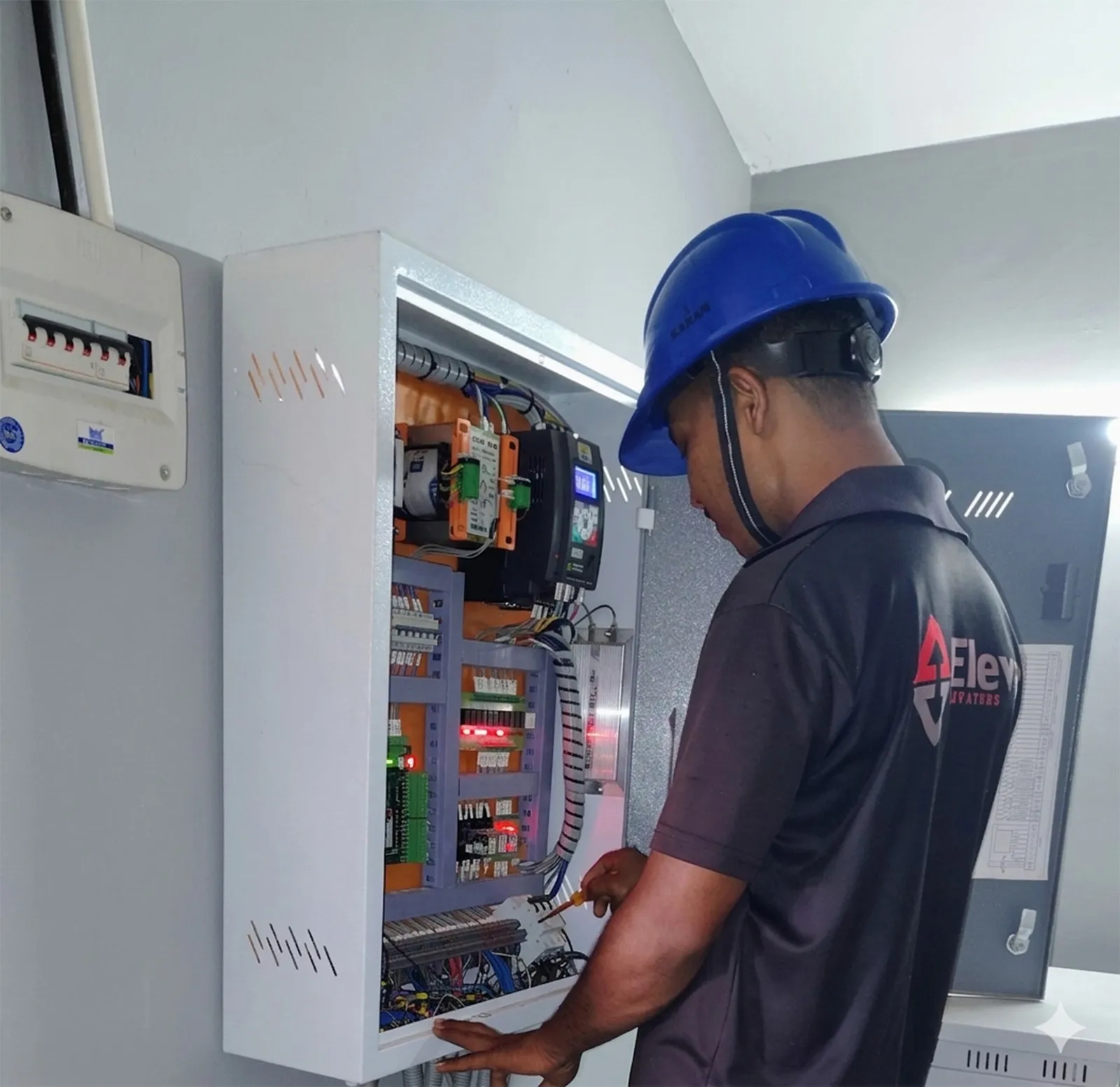
Age of the lift, recurring issue pattern, and current operating condition
Whether the main need is aesthetic improvement, functional upgrading, or both
Which elements are still usable and which are weakening reliability, safety, or day-to-day confidence
Key points
Controls, doors, leveling, ride quality, safety, and access control can all sit inside the same upgrade discussion.
The aim is to improve long-term practicality, not just make the lift look newer.
Our Clients
Vicco
MR.DIY

DoubleTree by Hilton

Vedanta
Concrete Builders

Unichem

Hero
Adwalpalkar
Aldeia de Goa
B&F

Bharatgas

Bina Punjani
CDM

ESG

Jubilant Foodworks

South Realty
Vicco
MR.DIY
DoubleTree by Hilton
Vedanta
Concrete Builders
Unichem
Hero
Adwalpalkar
Aldeia de Goa
B&F
Bharatgas
Bina Punjani
CDM
ESG
Jubilant Foodworks
South Realty
Modernization is usually the right discussion when the shaft and basic lift route are still usable, but the control system, doors, ride quality, leveling, or safety expectations have moved well beyond what the current equipment can support confidently.
Clients typically come to this page when the lift has started showing repeated breakdowns, when service costs are rising on an ageing installation, when manual doors need to be converted to automatic doors, or when the cabin and landing finishes have become too dated or damaged to keep carrying forward.
A modernization review can also include security and access upgrades such as RFID cards, PIN-based access, or fingerprint access where the building wants tighter control over who can use the lift. The useful first step is a condition-led discussion rather than a brochure-led one.
Where this is usually suitable
Buildings with ageing passenger lifts
Properties facing recurring faults or poor ride quality
Sites converting manual doors to automatic doors
Owners comparing modernization against full replacement
Where modernization discussions usually begin
Breakdowns are getting more frequent
Repeated faults often signal that the lift needs more than reactive attendance. A condition-led review helps show whether controls, doors, leveling, or a wider upgrade path is the real issue.
The lift still runs, but the doors, cabin, and controls feel outdated
Manual doors, dated cabin finishes, worn landing panels, and old control interfaces can all make the lift feel older than the building wants to carry forward, even before complete failure enters the picture.
The building wants a stronger route than patchwork repairs
Modernization is often the right middle path when a full replacement is premature but ongoing piecemeal repair is no longer a convincing long-term answer, especially where service costs from the original manufacturer have become difficult to justify.
Relevant project example
This case study is useful because it shows how an ageing commercial lift can be given a fresh operational life without forcing a full replacement route.
Project case study
Commercial elevator modernization in Panaji
A Panaji case where a 12-year-old lift from a multinational elevator brand was upgraded with new controls, automatic doors, safety devices, and a renewed cabin instead of being replaced entirely.
Planning notes worth reviewing early
These articles help frame the discussion when the building is deciding how much of the modernization should be aesthetic, functional, or driven by a deeper audit.
Planning insight
Should your modernization be aesthetic, functional, or both?
Helpful when the building first needs to separate cabin and finish changes from upgrades that affect reliability, safety, and operating smoothness.
Planning insight
Elevator modernization for a 7yo lift
Useful when the building wants to understand what should be audited beyond finishes, including sensors, interlocks, ropes, doors, and controls.
Planning insight
What elevator audits sometimes uncover before modernization
Helpful when the building wants to know whether the real issue is only wear and tear, or whether installation and alignment faults are also sitting underneath the symptoms.
Questions buyers usually ask
When does modernization make more sense than full replacement?
Usually when the shaft, basic lift route, and some major elements are still serviceable, but the controls, doors, ride quality, signaling, or safety systems are no longer keeping the lift dependable in daily use.
Can modernization help with repeated breakdowns?
Often yes, but only if the recurring issue is being diagnosed correctly. In some buildings the problem is mainly controls or door operation, while in others the equipment condition points to a broader upgrade requirement.
Can modernization be only aesthetic?
Yes, in the right condition. If the lift is relatively new and mainly needs a fresher visual standard, the work may stay focused on the cabin, landing finishes, panels, music, or access-control additions. But on older lifts, a purely aesthetic route is often not enough by itself.
Can security access be added during modernization?
Yes. Depending on the building and controller condition, modernization can include RFID cards, PIN-based access, fingerprint access, and related control logic as part of the wider upgrade.
What the next step usually looks like
A modernization enquiry is usually strongest when it starts with the lift's present condition rather than with a fixed upgrade list.
Share what kind of lift is in use, the approximate age of the equipment, and the building type.
Mention the main recurring issue such as controls, door operation, leveling, ride quality, cabin wear, or a manual-to-automatic door conversion requirement.
Use the enquiry form to begin the discussion. A short condition note is enough for Eleva to suggest whether the next review should focus on aesthetic upgrades, functional modernization, or a deeper replacement decision.