
Puzzle parking is useful when parking count changes project viability.
Puzzle parking system
Puzzle parking systems for constrained sites where parking count and circulation both matter.
Puzzle parking steps in where stack systems reach their capacity limit. Using an independent lift-slide grid, it stores and retrieves vehicles across multiple levels, with each car accessible without displacing another. Ideal for multi-user sites needing density and individual retrieval without full tower automation, it is a strong balance of capacity, access logic, and cost efficiency.
Parking discussions are most useful before the footprint, circulation, and parking target are finalized around the wrong assumption.
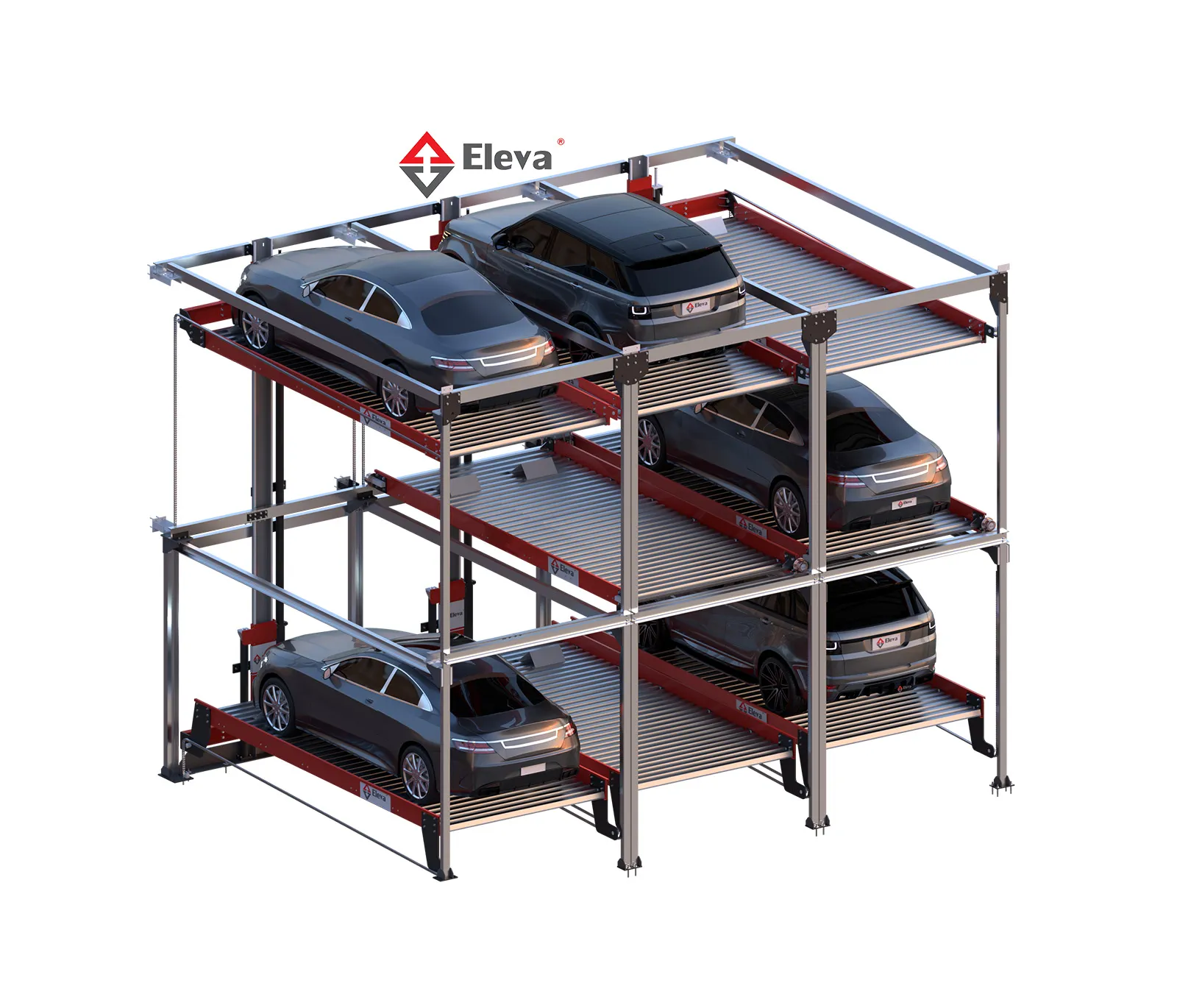
What to review early
Target parking count and footprint pressure
Expected user movement and peak retrieval periods
Maintenance access, controls, and day-to-day operating logic
Key points
The system should work operationally, not only fit on a drawing.
Circulation and retrieval logic should be reviewed early, especially on mixed-use sites.
Our Clients

Vicco

MR.DIY

DoubleTree by Hilton

Vedanta
Concrete Builders

Unichem

Hero

Adwalpalkar
Aldeia de Goa

B&F

Bharatgas

Bina Punjani

CDM

ESG

Jubilant Foodworks

South Realty
Vicco
MR.DIY
DoubleTree by Hilton
Vedanta
Concrete Builders
Unichem
Hero
Adwalpalkar
Aldeia de Goa
B&F
Bharatgas
Bina Punjani
CDM
ESG
Jubilant Foodworks
South Realty
Where this is usually suitable
Mixed-use and developer-led projects
Urban sites with limited land
Projects where ramps consume too much value
Sites needing more density than stack parking can provide
Questions buyers usually ask
What makes puzzle parking different from stack parking?
Puzzle parking moves platforms to bring the selected car to an exit. In dependent stack parking, someone must first drive the lower car out to release the upper car. Ask to see how the proposed system retrieves a car and compare the space, cost and waiting time.
Is puzzle parking only relevant for large projects?
No. It is about site fit rather than scale alone. Some medium projects benefit significantly when footprint pressure and parking count are both important.